lunes, 18 de noviembre de 2013

Nuestras actividades en imágenes 2013/2014


HALLOWEEN JACK O'LANTERNS CONTEST 

    Our first and second year E.S.O. students took part in a pumpkin contest which was organized by the English Department. 


TIM BURTON'S POEM: VINCENT AND THE LEGEND OF STINGY JACK

     Students from first year E.S.O. read Tim Burton's poem: Vincent and then they had the chance to visualize his short film. Afterwards, they acted out a short theathre play called The legend of Stingy Jack, based on the origin of Jack O'Lanterns. 


CHRISTMAS CARDS CONTEST

    Some students from first, second, third and fourth year of E.S.O., as well as some from first Bachillerato prepared some Christmas cards written in English and French. 


MUSICAL: THE NIGHTMARE BEFORE CHRISTMAS (PESADILLA ANTES DE NAVIDAD)

       Musical starred by students from first, second and third year E.S.O. and some teachers, who played different musical instruments. 


WORLD PEACE DAY


    A group of teachers and students from our school offered a concert on the World Peace Day with songs in English and Spanish language. The songs in English were I have a dream (Abba); Blowing in the wind (Bob Dylan) and Hallelujah (Leonard Cohen). 


A NEW YORK FAIRY TALE. TEATRO ALCÁZAR (MADRID) 

    Our first, second  and third year E.S.O. students went to Teatro Alcázar in Madrid to attend a theatre play in English language. 


PEDRO Y EL LOBO (Peter and the Wolf)

        Our first, second, third and four-year E.S.O. students went to the Music School in order to watch and listen to the performance of Peter and the Wolf (Serguéi Prokófiev), along with its narration in Spanish and English. The narrators were two students from our school who belong to the second year of E.S.O.


CULTURAL VISIT TO TOLEDO: CIUDAD DE LAS TRES CULTURAS


        On April, 24th some of our students from third and fourth E.S.O., and 1º Bachillerato went on a day-trip on a cultural visit to Toledo, which included the visit to the Synagogue and its Sephardic Museum, and also the visit to the Cathedral and the Sacristy Museum. Our students were accompanied by a group of 17 American ones from Medfield (Massachusetts), who spent that whole week with them in their houses, which let them know better Spanish culture. They also attended all our school lessons and took part in different classroom activities.

Spanish and American students 


American students


View


WORLD BOOK DAY: 23rd of April


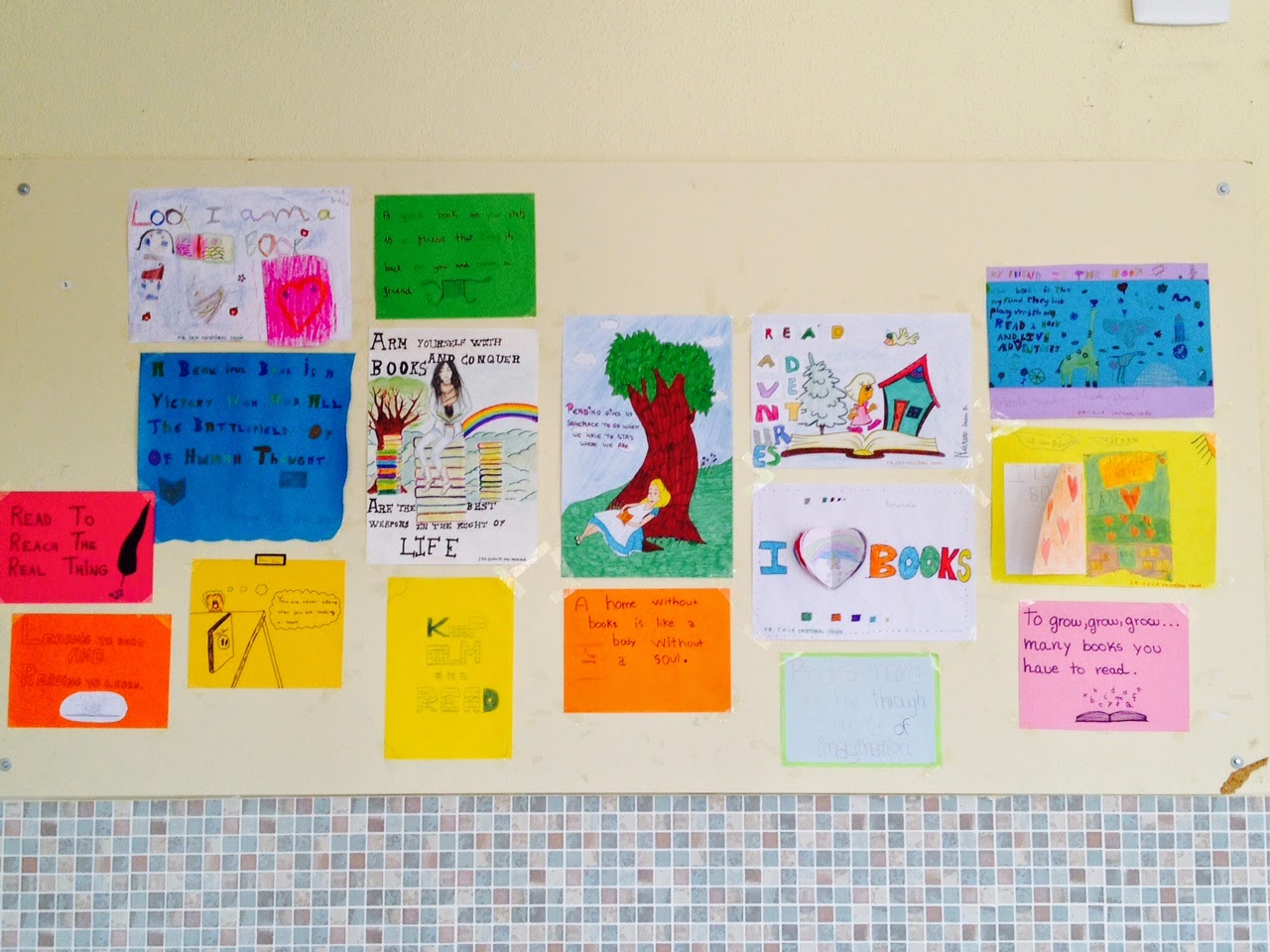
           On occasion of World Book Day, on 23rd of April, we exchanged different slogans in English language, made by students and related to the promotion of reading, with the rest of Primary and Secondary schools in Quintanar de la Orden. Moreover, at our school, several students from first and second E.S.O. read different short stories in English, French and Spanish. The titles of the English short stories were The Stranger in the Garden and The Selfish Man.


TRAVELLING BOOK

Our school has taken part in a collective activity along with the rest of schools in Quintanar de la Orden. This activity consisted of making a handmade book in English language, which tells a story invented by all the students. It is called travelling book because it travels from one school to another so that students can start, continue and finish the story. Here you have some pictures of it. 


MUSICAL MAMMA MIA

Musical starred by students from fourth year of E.S.O., first and second years of Bachillerato, as well as some teachers, who played different musical instruments.


lunes, 7 de octubre de 2013

Disciplina no lingüística: Physics and Chemistry (3º E.S.O.)

PHYSICS AND CHEMISTRY

         El profesor Fernando Pérez Gómez de la Cueva impartirá este curso la asignatura de Física y Química a los alumnos de Sección bilingüe en 3º de E.S.O. 

o   Metodología

         La metodología para el grupo bilingüe será la reflejada en la programación de Física y Química para 3º de E.S.O., con la diferencia del uso del inglés. El uso de la lengua extranjera será mayoritario y prioritario, utilizando el español para hacer aclaraciones de conceptos puntuales que lo requieran, algunas actividades concretas y algún bloque específico del temario que utilice un vocabulario especialmente complejo para los alumnos.

         Al tratarse de una materia científica con vocabulario específico, ampliamente desconocido por los alumnos, al ser la mayoría palabras poco cotidianas, se utilizará como método de motivación el uso progresivo del inglés, aumentando en cada tema progresivamente el porcentaje del uso de esta lengua.

         En cuanto a los materiales, serán elaborados por el profesor completamente en inglés (actividades, definiciones...). Además, los alumnos tendrán el libro en castellano de 3º de E.S.O. de la editorial Santillana, que servirá de apoyo a la comprensión de la materia cuando sea expuesta en la lengua extranjera.

o   Contenidos
  
1. Science: matter and its measurement
2. Physical states of matter.
3. Matter: how it is classified
4. Matter: electrical properties and the atom
5. Elements and compounds
6. Chemical changes
7. Chemistry in action

  
   o   Evaluación y calificación

El profesor de la disciplina no lingüística intentará impartir su clase íntegramente en la lengua extranjera durante todas las sesiones semanales. No obstante, y de forma puntual, se realizarán aclaraciones, explicaciones y actividades en castellano cuando así se estime necesario o conveniente, no separando nunca tajantemente la parte en inglés de la parte en castellano.

 La nota final de la DNL dependerá del porcentaje que cada profesor le otorgue a cada indicador para superar los criterios de evaluación establecidos, los cuales serán alcanzados por diferentes instrumentos de evaluación. 

Los criterios de calificación y los instrumentos de evaluación para el grupo Bilingüe serán los mismos que los utilizados para el resto del alumnado del mismo curso de la ESO, siguiendo los indicadores de evaluación reflejados en la Programación del Departamento.

Por último, el objetivo de los profesores de las DNL no es enseñar la lengua extranjera, sino usarla en el contexto de la asignatura como instrumento de la vida cotidiana.